

What the data says#
Two surveys from 2026 show the gap. Read both with care, because they measure different groups.
- Microsoft, Work Trend Index 2026: 20,000 AI users in 10 markets, surveyed from 18 February to 20 April 2026. Only one in four (26%) said their leadership was clearly and consistently aligned on AI. 19% of AI users are in what Microsoft calls the "Frontier" (Microsoft).
- Gusto, State of Small Business 2026: 1,731 US business owners with 24 or fewer employees. According to Gusto's survey, as reported by CPA Practice Advisor on 12 November 2026, 67% of small businesses use AI tools, and 25% of businesses with employees now have an AI policy, up from 15% last year (CPA Practice Advisor).
Put side by side, the two figures say the same thing in different words: use is moving faster than written rules. Neither figure is about Oman. We say so in the last section.
What we see with clients#
We see this often. A manager says in a meeting, "Team, use AI." Everyone nods. A month later, one person pastes a client contract into ChatGPT, another has not touched it, and nobody knows which one is right.
The problem is rarely the tool. It is the missing direction. Your staff may already be ahead of you. They do not wait for permission, and they work without a plan. Without a plan, two things happen: information goes where it should not, or everyone builds their own way of working and nothing connects.
What to do this week#
- Write the three lines below in your own words, in your team's language.
- Send them to your team group this week. You do not need a long policy page. Three lines are enough to start.
- Review them after a month. Add a line only when a real case shows a gap.
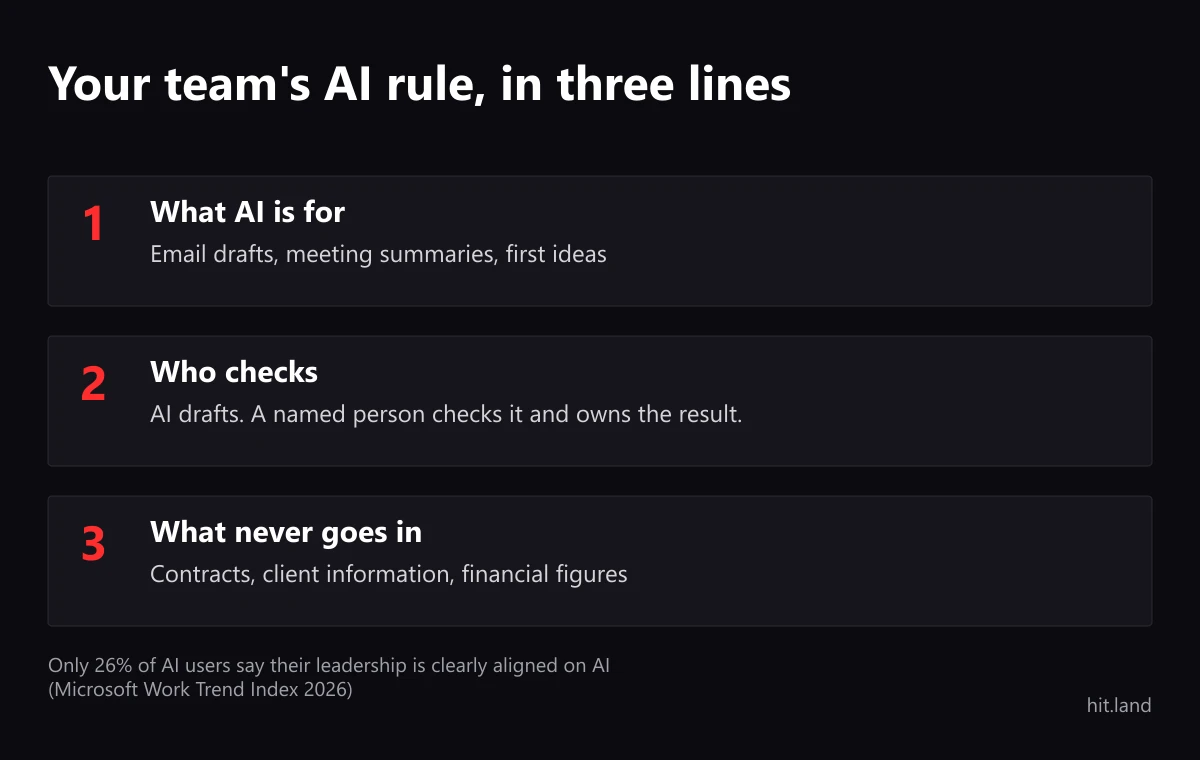
Line 1, what AI is for: Use AI for email drafts, meeting summaries and first ideas.
Line 2, who checks: AI makes the draft. A named person checks it and owns the result.
Line 3, what never goes in: Never put contracts, client information or financial figures into AI.
Each line answers one of the three questions behind the rule: for what, how far, and with which information. Use the same three questions when you talk to your team. If a person cannot answer one of them, the rule is not clear yet, and that is the place to start the next conversation.
The first line gives people permission to use AI, and says where it helps. The second line keeps a human responsible, so a mistake has an owner. The third line protects the information that would hurt your business if it left the company. Together they replace "use AI" with a direction people can follow on a normal working day.
What the numbers do not show#
- No Oman figure: we do not have an exact figure for the Oman market, and we say so. Please do not read either survey as a local number.
- Different groups: the Microsoft figure covers AI users in 10 markets. The Gusto figure covers US small businesses, and we read it from a trade-press report, not from Gusto's own page.
- A start, not a full policy: three lines give your team direction. They do not replace legal or security advice for your industry.
FAQ#
Do I need a long AI policy?#
No. Three lines are enough to start: what AI is for, who checks the output, and what never goes in. You can add detail later, when a real case shows the need.
Are these numbers about Oman?#
No. The Microsoft figure comes from AI users in 10 markets. The Gusto figure comes from US small businesses. We do not have an exact figure for Oman.
Why is "use AI" not enough as an instruction?#
Because it does not say what for, how far or with which information. Your team still has to guess, and each person guesses differently.
What information should never go into AI?#
Start with contracts, client information and financial figures. Then decide with your team which other data belongs in the same group.
Who should check what AI produces?#
A named person. AI can draft, but the person who sends or uses the result owns it.
When should we review the rule?#
After a month, as the steps above say, or sooner when a real case shows a gap. Change one line at a time, so your team can see what changed and why.
Sources#
- Microsoft, Work Trend Index 2026: https://www.microsoft.com/en-us/worklab/work-trend-index/agents-human-agency-and-the-opportunity-for-every-organization
- CPA Practice Advisor, report on Gusto's State of Small Business 2026 (12 November 2026): https://cpapracticeadvisor.com/2026/11/12/small-business-owners-are-more-confident-in-their-own-companies-than-in-the-economy-and-two-thirds-use-ai/193807 (Gusto's own page was not opened)
For help setting this up with your leadership team, see Executive coaching.
Related case studies
Real projects where we applied the ideas in this article.

E-commerce Website — MAS Trading
A comprehensive digital transformation for MAS Trading, featuring a high-end e-commerce platform for premium stone and…
View case study
Business Innovation Consultation — Genius
HiT Land provided strategic financial consulting and innovation planning to help Genius Creative Agency optimize their…
View case study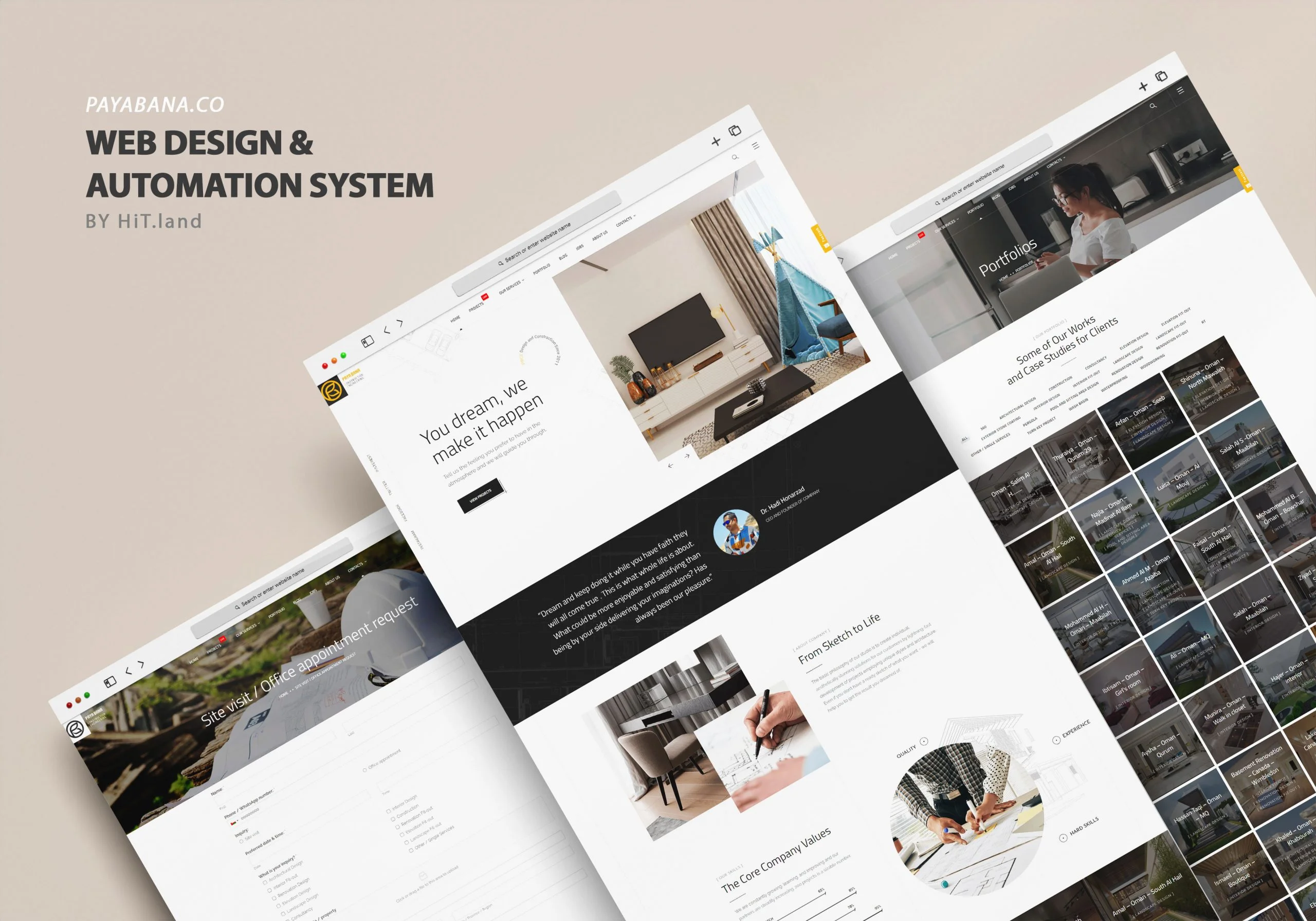
Website & Digital Marketing — Paya bana
A comprehensive digital transformation for Paya bana, featuring custom web development and integrated marketing…
View case study